Feminine Spaces — Transforming Tourism

Kaaya Learning Centre sits within the hospitality sector by necessity — there is a physical site to maintain and a market-based system to cover expenses. People are drawn here for an experience that is genuinely different from a conventional retreat or resort.

But not every visitor arrives ready to engage with that difference. Some want proximity to nature without the responsibility that comes with it — wanting to be close to something they don’t particularly want to understand or respect. Kaaya has learned, slowly, to be more deliberate about who it hosts, and why.

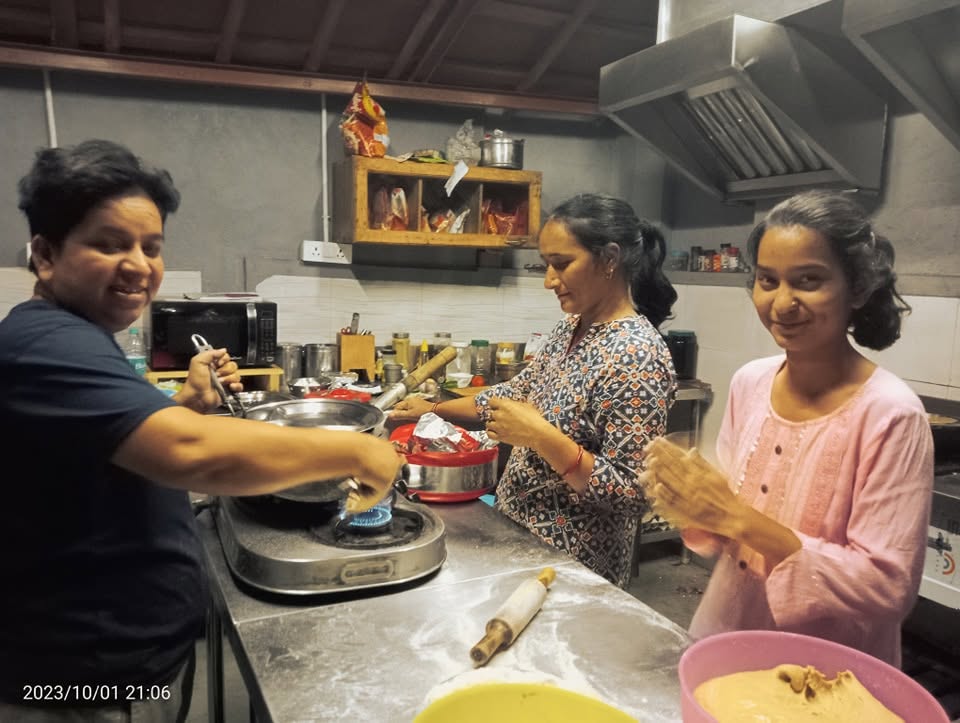
What has stood out, over time, is something simpler than a tourism strategy: the retreat is largely run by women, and their presence shapes the atmosphere of the place in ways that are hard to fully articulate but easy to feel once you’ve stayed here. There is a particular kind of attentiveness in how meals are prepared, how guests are welcomed, how the day is paced. It isn’t performed hospitality — it’s closer to the way a home is run, extended outward to include strangers.

This isn’t a claim about what spaces “should” feel like. It’s an observation about what has, in practice, made Kaaya work — and a reason we’ve chosen not to scale past what that kind of attention can sustain.
Neighbours as Organic Growers

The incentive to farm has been steadily declining, particularly for small farmers. Whether it’s the monkey menace, the unpredictability of monsoons, or the meagre returns on real effort — somehow, the risks and incentives around farming have become deeply unbalanced. Many farmers in our neighbourhood have had little choice but to abandon agriculture, sell land, or migrate.

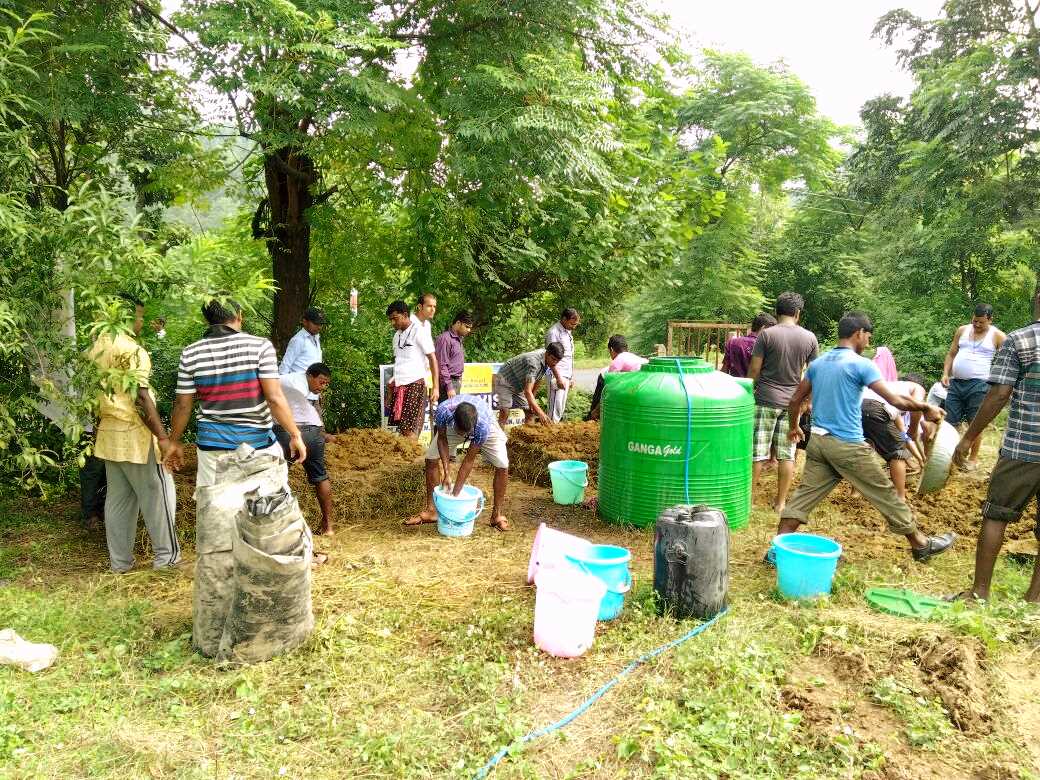
As part of Kaaya’s urban-rural connect work, we’ve been learning — alongside our neighbours — to grow organic. A kitchen garden initiative in the neighbourhood has become a small but genuine experiment in what it might look like to make small-scale farming viable again: better soil practices, shared knowledge, and a market that doesn’t punish people for growing food close to home.

It is early, and far from solved. But every season, a few more households are trying it. That, on its own, feels like something worth continuing.

Neighbourhoods

To live, do, and rejuvenate

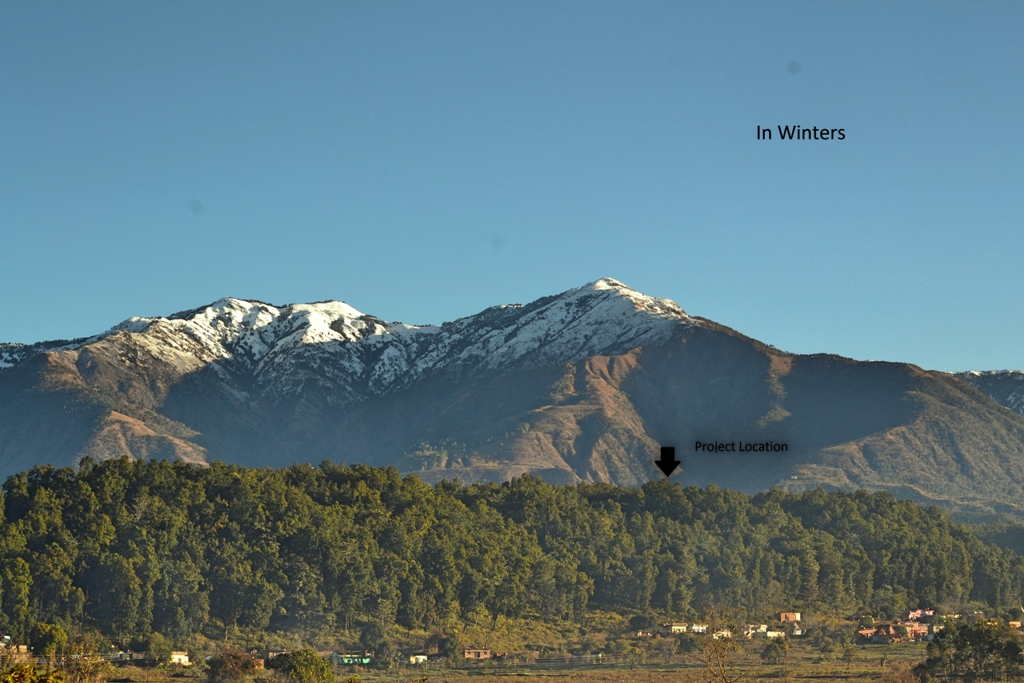
Kaaya defines its neighbourhood as a watershed — nine villages, with their people, land, forest, flora and fauna, and water bodies. For Kaaya, this watershed is the real learning ground: the space within which we try to take responsibility for sustainable living, rather than simply practising it within our own boundary.

Physically, Kaaya Centre is a self-sustained campus, with boarding and lodging for residents, students, and visitors. The campus is linked by natural footpaths to a common hall, mess, mud cottages, a library, and various learning spaces. But the campus itself is only the starting point. The actual neighbourhood — the nine villages around it — is where the deeper, slower work happens: working with farmers, supporting local livelihoods, and trying, in small ways, to understand what a watershed actually needs to stay healthy.

This is not a finished picture. It’s an ongoing relationship between a small campus and the land around it — one that keeps revealing how much there still is to learn.

The Making of Kaaya

In the larger pursuit of “development and growth,” many of us tend to lose our connection with nature, self, family, community, and the neighbourhoods. Somehow, we seem to forget that it is our immediate environment — the people, their habitat, soil, water, air, trees — that sustains us and nurtures life.

Kaaya evolved out of this realisation of a growing disconnect from the things that really matter in an individual’s life. Urban settings make us consumers, even of the education we receive. Now, with knowledge, information, and media at our fingertips, it is the ability of our own faculties — to absorb, reflect, and respond — that is being tested. Are we making the right choices, or are we increasingly overwhelmed by information, unable to act despite the imminent crisis of sustainability around us?

The beginning

It was in 2011, perhaps in some moment of inertia, largely to satisfy a curiosity about how this rural-urban continuum works, that the idea of Kaaya took shape. The idea was simply to stir a little and see what patterns emerged — to re-imagine the possibilities of sustainable living.

Thus, Kaaya began as an experiment. A small parcel of land was purchased in a village far from the city, in 2012.

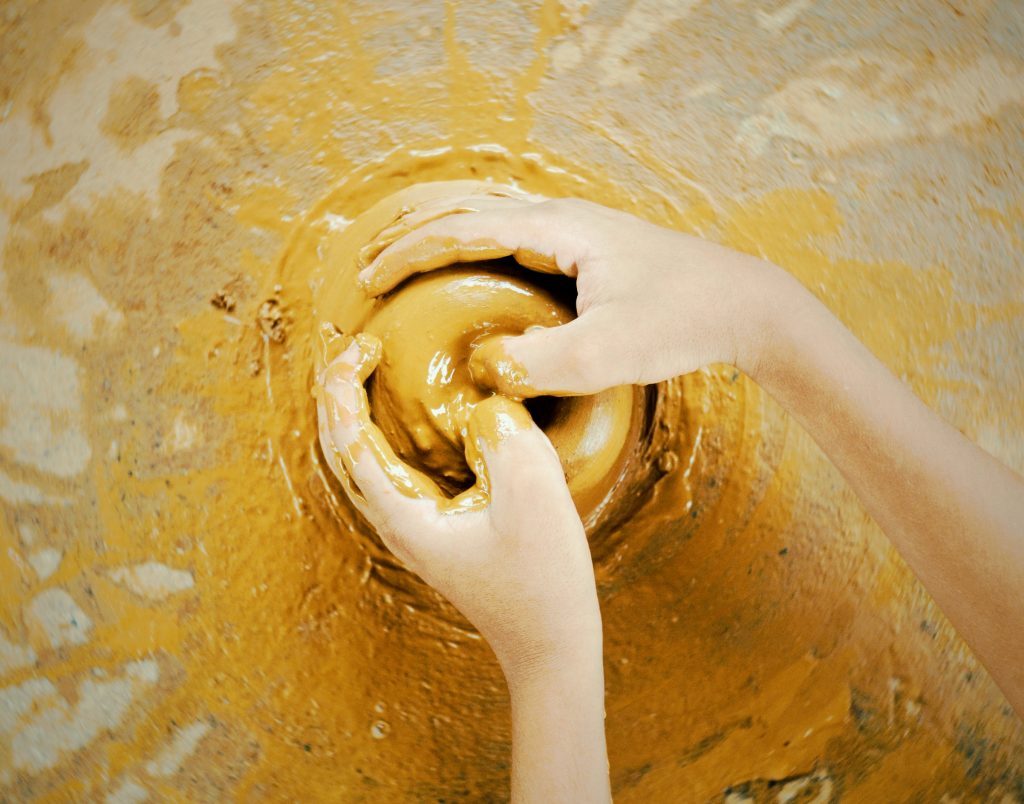
There was no blueprint. The space was named Kaaya — in Hindi, it means ‘body,’ the outer physical form wherein the person who visits or inhabits the space leaves something of themselves behind. A small mud-and-earth building was created using locally available materials, within the limited resources we had. Slowly, people began to visit — often arriving with an intent to do things that felt important to them. Slowly, it became Kaaya Learning Centre: a space for living, for nature art, for farming, for buying directly from farmers.

As we grew, we couldn’t help but notice that the river streams were drying up, land erosion loomed large over sloping fields, and biodiversity was being lost gradually across our neighbourhoods. This pushed us to look beyond the campus itself — toward the watershed, the wider community, the question of what a single piece of land could meaningfully be responsible for.

That question is still the one Kaaya keeps asking.