Hosting Reflective Workshops: People Science Institute

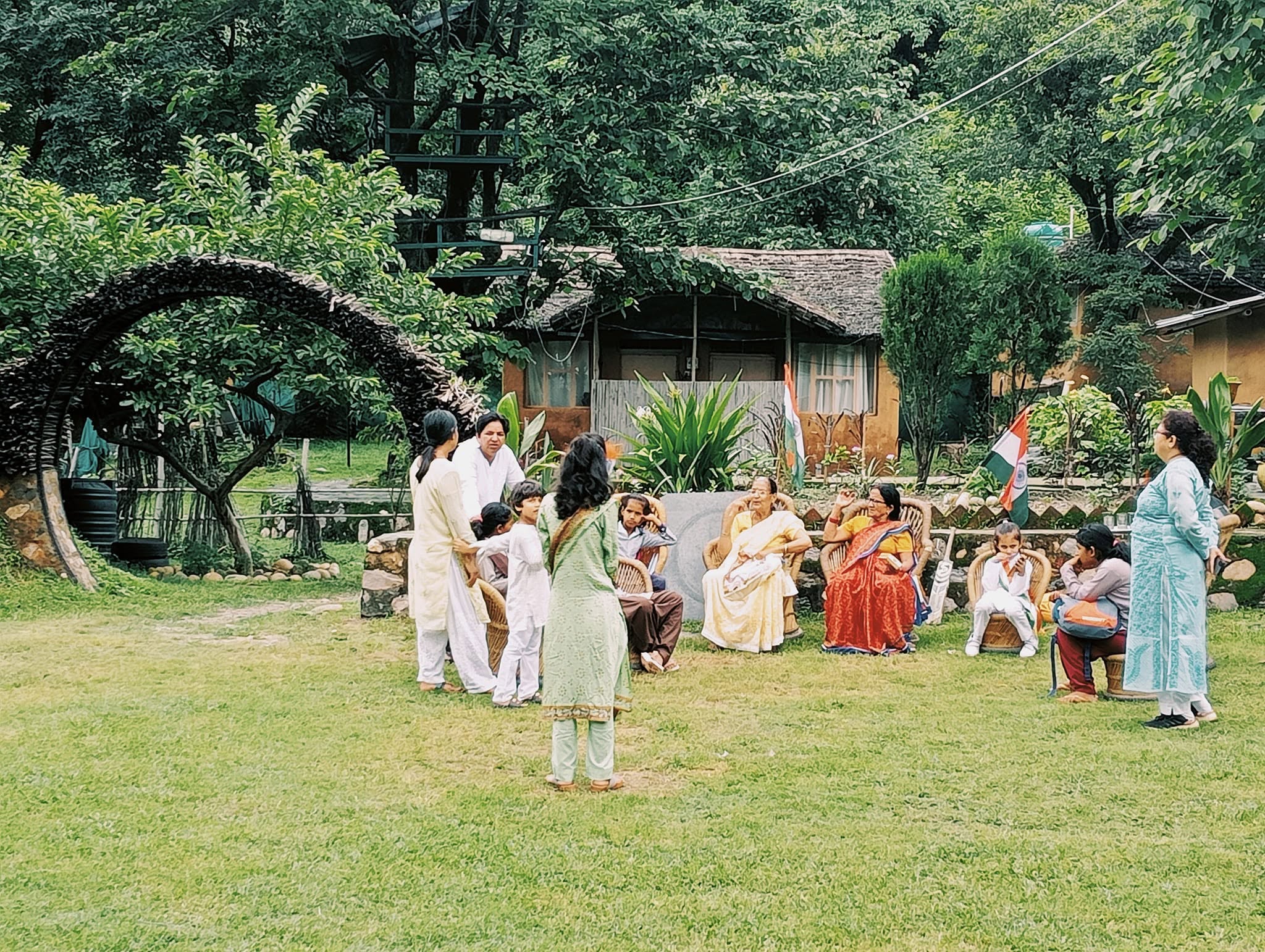
It was a pleasure to host “Manthan,” an in-house reflective workshop for the team at People Science Institute (PSI), Dehradun. With more than fifty participants living at Kaaya for three days, the team found space for genuine reflection alongside their structured sessions.

Encouraged by the response, we continue to look for opportunities to host similar reflective workshops for civil society and creative groups — settings where the pace of the place does some of the work that a conference room usually can’t.

An NGO Retreat: Waste Warriors, Dehradun

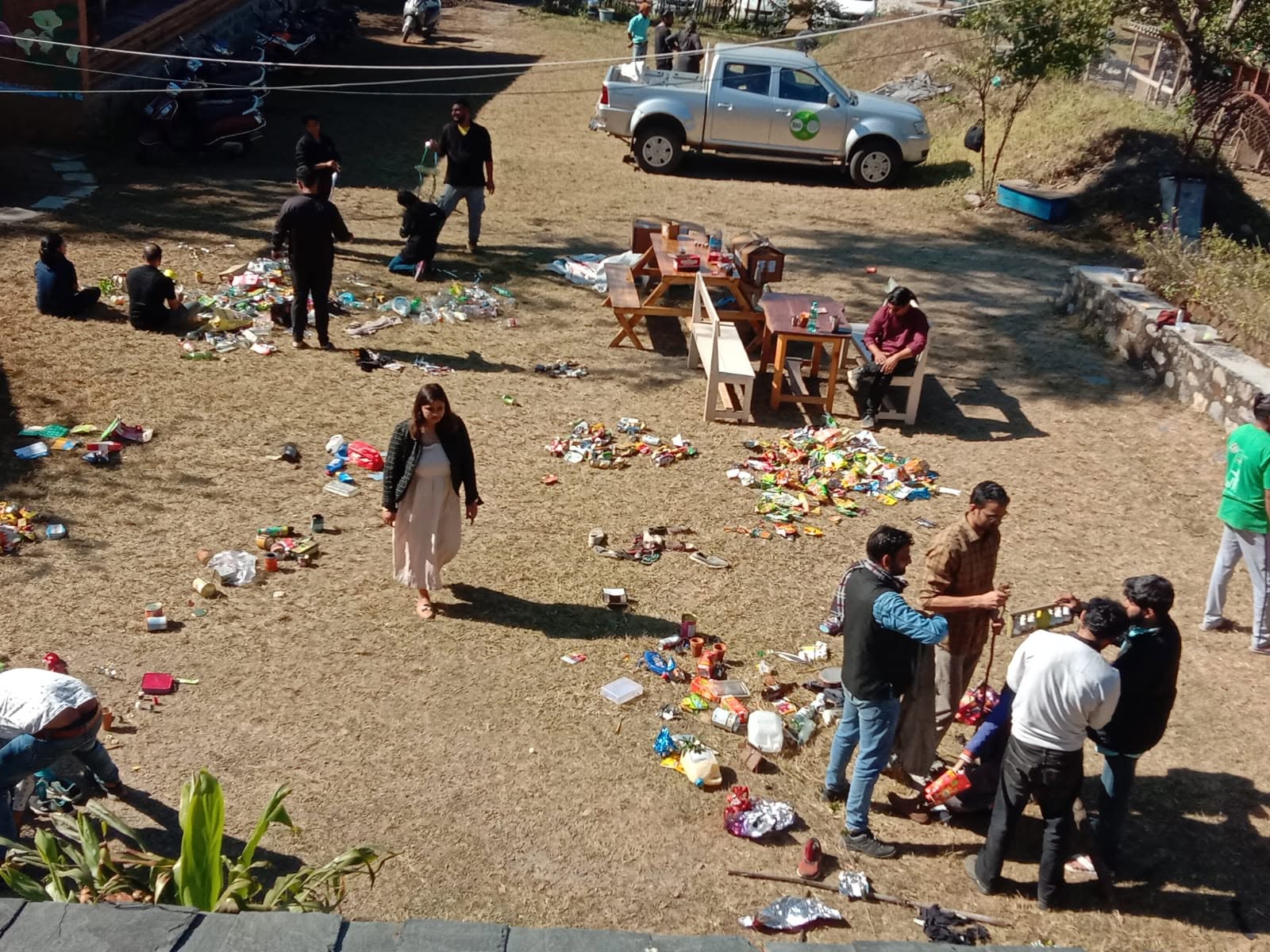
Kaaya has been a popular destination for groups like Waste Warriors, a citizen-led organisation from Dehradun. One group of twenty young Waste Warriors spent three days in residence, receiving leadership training from their coach while based at Kaaya — combining structured learning with genuine time in nature.

It’s one example of the kind of small-group, multi-day retreat Kaaya regularly hosts for civil society and community organisations looking for a setting that supports focused, reflective work away from the city.

Kaaya — A Refreshing Experience

Ajita, who goes by the name Penning Silly Thoughts, spent ten days at Kaaya.

“I stayed with Kaaya, which aims to offer a mix of urban-rural experience along with other learnings that wouldn’t normally come from the comfortable life of a big city.

Life at Kaaya is slow, yet fruitful — relaxed, yet busy. There were many occasions when we left the campus to explore nearby villages, scenic spots, and Dehradun city itself.”

Learning to Up-Cycle

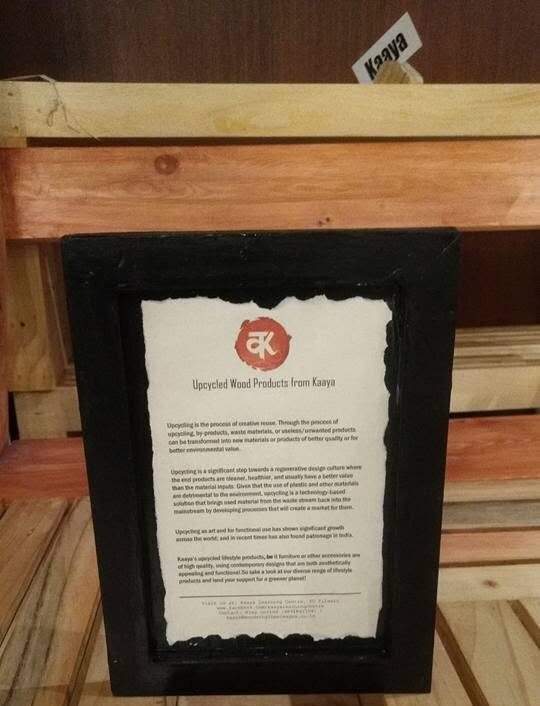
Up-cycling is the process of reusing discarded objects or materials to create something of higher value than the original. It reduces waste while giving something useful back in return.

At Kaaya, we’ve run this as an ongoing effort rather than a one-off campaign. The core idea is to bridge two different needs: the urban desire to live more sustainably, and the rural need to find viable, local sources of livelihood. We work with community members in neighbouring villages to find opportunities that genuinely benefit both sides — not gestures, but practical exchanges where discarded material becomes something someone is willing to pay for, made by someone who needed the work.

It remains a small-scale effort. But it’s one more thread in the larger pattern Kaaya is trying to weave: less waste, more local value, fewer things that simply get thrown away because no one thought to ask what else they could become.

The Rural Mart — Where It Began, What It’s Become

Not many people know it, but the roots of Kaaya can be traced back to a small initiative in the mountain district of Rudraprayag, where the seeds of a sustainable enterprise were first sown. That story has been told elsewhere — but its legacy lives on in the rural mart that now sits at the heart of Kaaya’s campus.

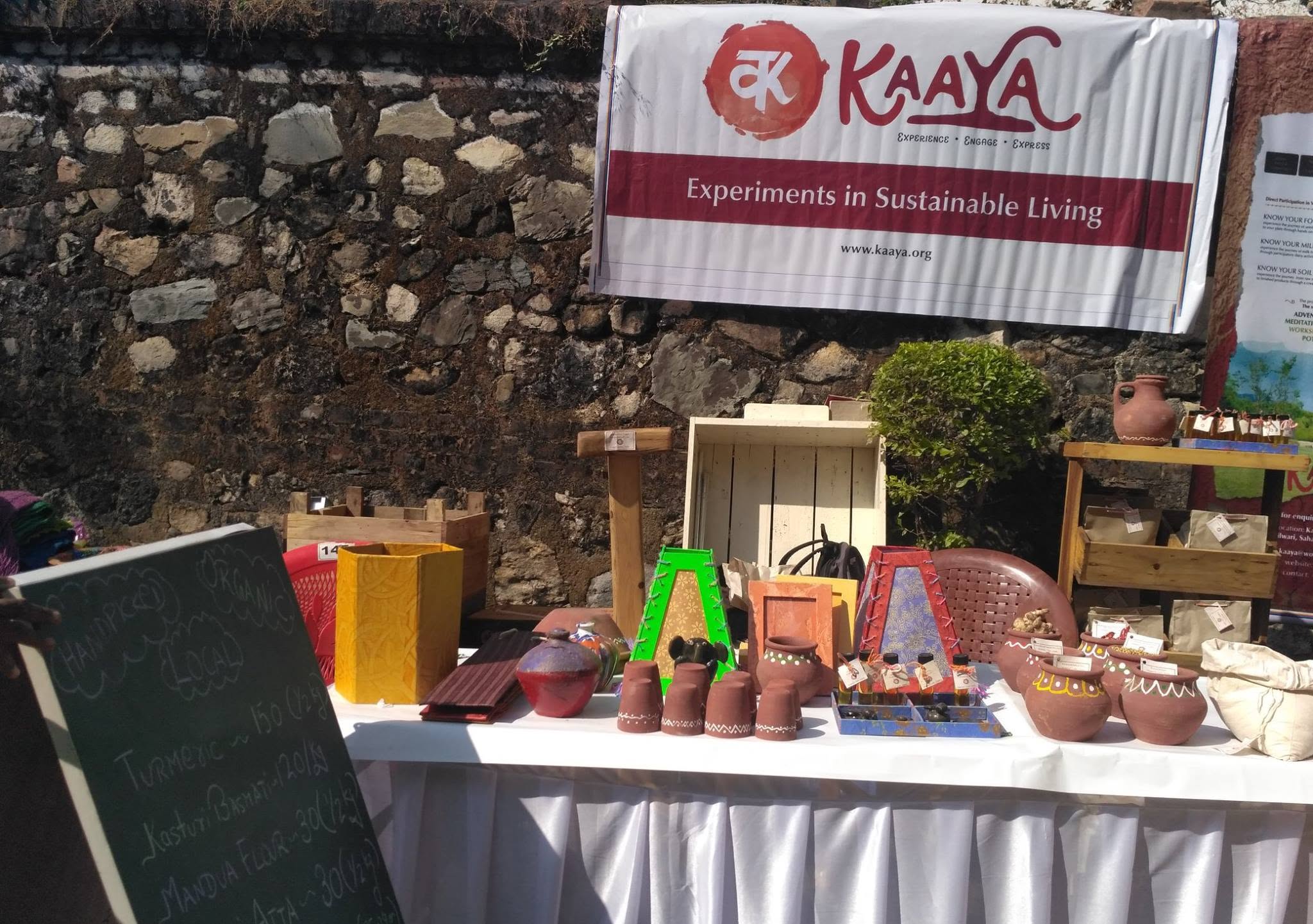
Today, Kaaya’s rural mart is a small souvenir shop showcasing rural products alongside art and craft made by hand — by Kaaya’s residents, visitors, and artists during their time here.

The philosophy behind it stays close to nature’s own rhythm: we don’t try to artificially extend the shelf life of what we sell. Things are allowed a degree of impermanence; eventually, most of what doesn’t sell goes back to the soil and regenerates naturally, rather than sitting in storage indefinitely. Everything on display or for sale is made in-house — by our local team, by visitors, by artists in residency, or grown on Kaaya’s own farms.

It’s a small operation, and deliberately so. But it’s also the clearest physical expression of what Exchange means at Kaaya: value created locally, sold locally, returned to the land when it’s done.

Empowering Neighbourhoods

Nestled in the Himalayan foothills near Dehradun, Kaaya Learning Centre has long worked at the intersection of rural livelihoods, sustainable practice, and community development. The Rural Women Entrepreneurs Fellowship is a natural extension of that work — and connects directly to the UMSVY partnership now active on campus.

Women in rural India hold real entrepreneurial potential, but face significant barriers: limited access to capital, little mentorship, weak market linkages, and minimal digital literacy. The fellowship works on a hub-and-spoke model — Kaaya as the hub, providing training and resources, with each fellow acting as a spoke who carries what she’s learned back into her own community.

What the fellowship covers

The programme works across several areas relevant to rural women entrepreneurs:

Sustainable agriculture and agro-based enterprise — organic farming and permaculture, beekeeping, mushroom cultivation, medicinal plant farming, processing and packaging of farm produce, and dairy or poultry business models.

Handicrafts and rural artisanal products — textile and weaving techniques, bamboo, jute and natural fibre work, pottery and woodwork, and training in selling through online platforms.

Wellness and traditional healing practices — natural skincare and herbal products, yoga and meditation training, and local wellness tourism for visitors.

Eco-tourism and homestays — setting up community homestays, hospitality and guiding skills, farm-to-table experiences, and heritage-based tourism rooted in local culture.

Digital and financial literacy — digital payments, basic bookkeeping, and marketing through social media and e-commerce.

Community leadership — training fellows to become peer educators, building self-help groups, and connecting women to relevant government schemes.

Programme structure

Each fellow receives hands-on training in business development, financial literacy, and sector-specific skills, paired with a mentor and access to a peer-learning network. Financial support ranges from seed funding to subsidised loans and equipment grants, and fellows gain market access through Kaaya’s eco-tourism initiatives, retail platforms, and exhibitions. Graduates are encouraged, in turn, to mentor others — extending the fellowship’s reach beyond its original cohort.

Who it’s for

Women living in and around Kaaya’s operational area, currently running or planning a small business, committed to sustainability, and willing to share what they learn with others.

How to apply

A short application outlining the business idea or current venture, followed by an interview with the Kaaya team for shortlisted candidates, and orientation for those selected. The fellowship runs six to twelve months, based at Kaaya Learning Centre, Dehradun.

If this is relevant to you, or to an organisation you work with, reach out at info@kaaya.org or +91-8077264976.

Maker’s Space

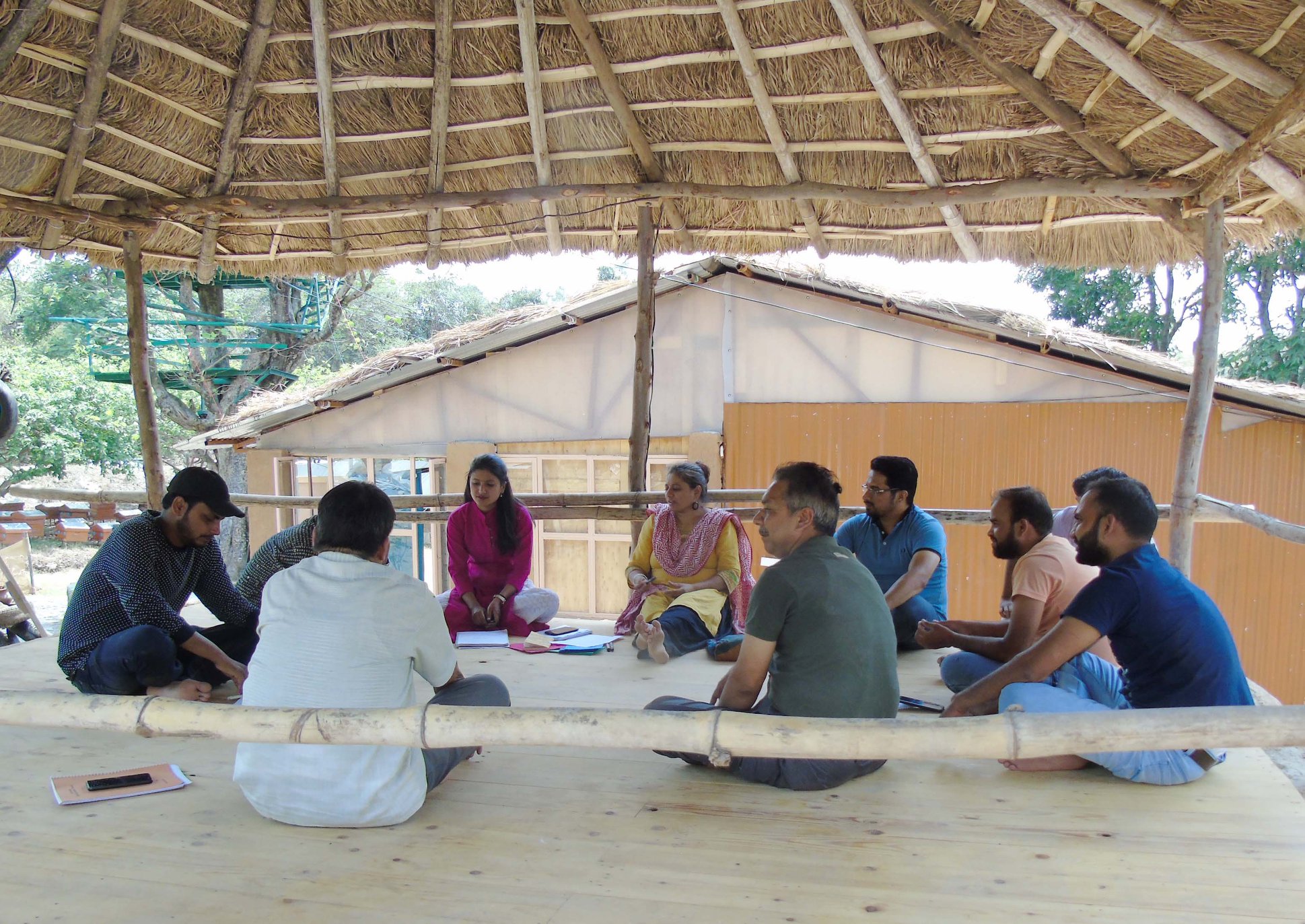
Kaaya as a physical space is designed to foster co-creation — activating the part of a visitor that wants to make something, not simply consume an experience.

The Maker’s Space is evolving to support urban-rural collaboration on practical, sustainable solutions for everyday living. We believe there’s real value in the kind of work that happens when rural knowledge and urban perspective sit in the same room: joint products, shared problem-solving, ideas that neither side would likely have reached alone.

Kaaya houses a small workshop with basic tools for hands-on, DIY-style work — prototyping, recycling and reuse projects, and small experiments in substituting imported materials or technologies with locally adapted alternatives. It’s a place to fuse the knowledge and technology that visitors bring with the traditional skill and material understanding the local team already holds.

The campus itself has hosted formal workshops too — sessions where the design of the space becomes part of the dialogue, helping participants move an idea from concept toward something physical. The setting tends to do as much work as the agenda.

Residencies at Kaaya: Writers and Stillness

Kaaya has, at different points, become a residency space for people working in very different registers — writers seeking solitude, and practitioners exploring stillness and meditation. Neither was planned as a formal programme. Both emerged because someone asked, and the place turned out to be right for it.

Writers in residence

We had the pleasure of hosting Tripta Batra as writer in residence at Kaaya — someone who has long facilitated workshops on subjects ranging from the joy of learning to the search for meaning, fear and trust, and creative writing itself. Her approach was always to shape each session around the group in front of her, rather than a fixed curriculum.

The structure was simple: private space for most of the day, shared moments around the dining table, and a few structured hours — part joint exploration, part one-to-one conversation. We spent that time in the quiet of the hills, away from the noise of the city, working through the physicality of words.

Meditation and stillness

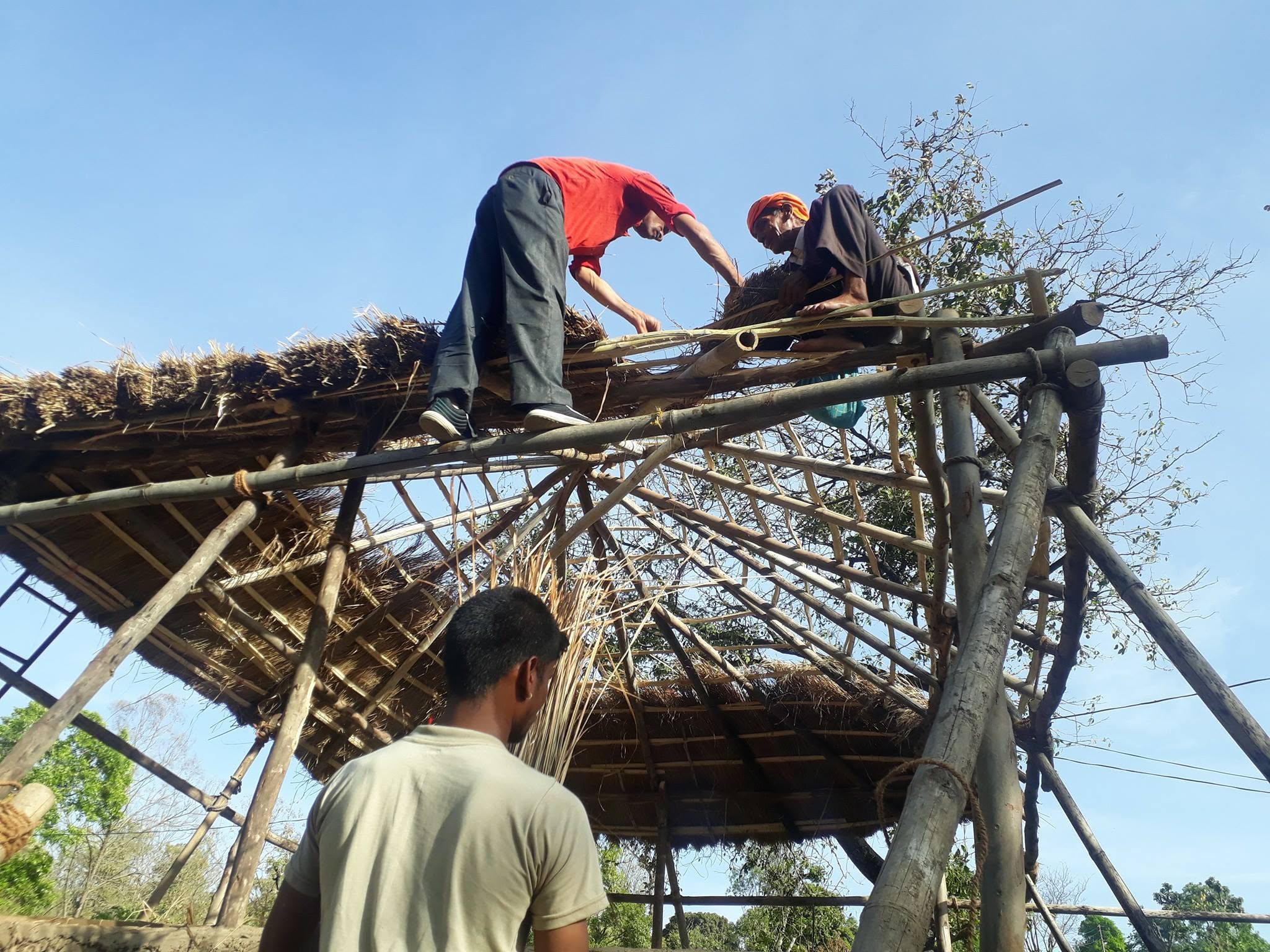
Kaaya was never designed with meditation in mind. The space evolved organically — mud floors, cob walls, stone roofs, blending into the wooded landscape around it — and that rawness lent itself more naturally to imagination and creativity than to formal spiritual practice.

Even so, visitors often remarked on something they felt here, something many connected to a kind of stillness or energy, without quite naming it. For years, requests for yoga and meditation camps went unanswered simply because Kaaya wasn’t built to host them at scale.

That began to shift after we hosted a happiness programme for village children and were encouraged, almost on a whim, to attempt something more advanced. We didn’t know where the resources would come from or how long it would take — but slowly, it came together. Kaaya is now, tentatively, becoming a space where the spiritual pursuits of the self can be explored alongside its responsibilities to the neighbourhood. A new, still-unfolding thread in what this place can hold.

Art-Eco 2019–20 — A Socio-Cultural Project

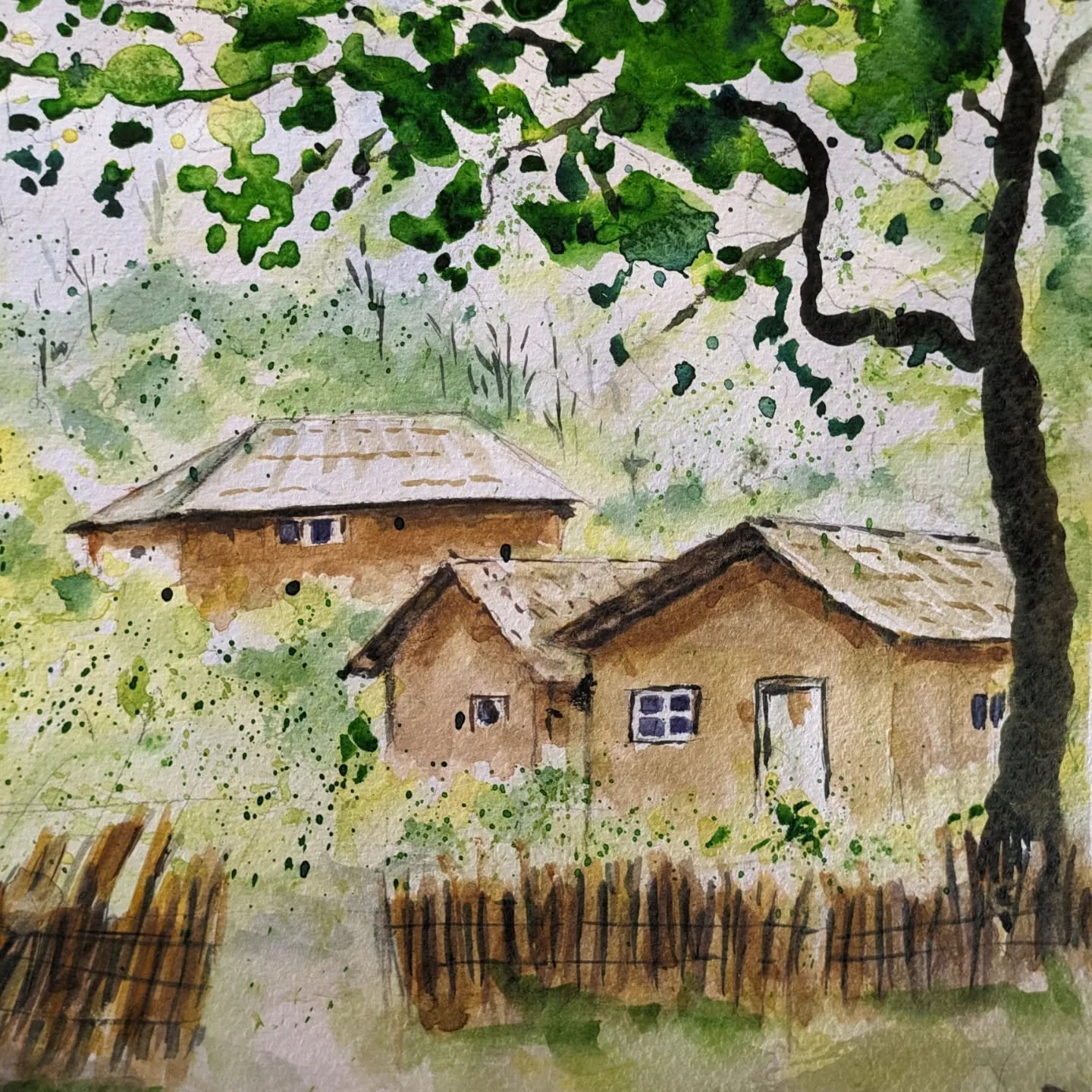
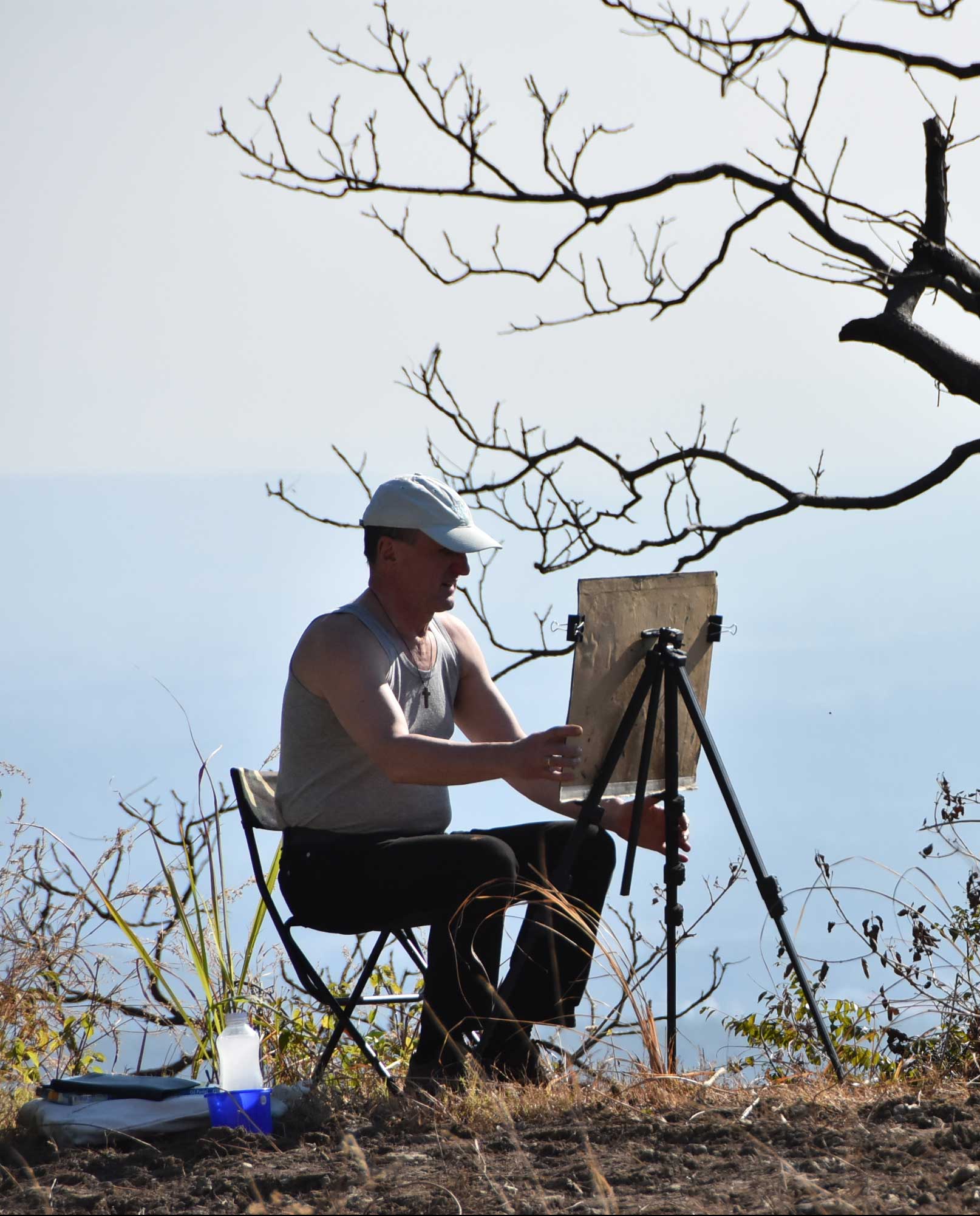
Today we conclude a week-long journey with international plein air artists at Kaaya. Plein air painting means leaving the studio behind to paint and draw directly in the open air — and at a time when both climate and humanitarian crises loom large, these artists left the comfort of home to pick up brushes, paints, and easels in search of something the studio couldn’t offer them.

Day one: arrival

Long journeys take their toll, and what you need at the end is somewhere warm to settle. Arriving at Kaaya late in the evening is, for most, a small shock — minimal lighting, rough terrain, mud-earth cottages without central heating. The rural reality asserts itself quickly. And yet, amid the adjustment, there’s an unmistakable burst of fresh air, of being somewhere genuinely different. That was the response we witnessed as fifteen artists arrived across four vehicles.

Day two: exploring and communicating

In the cold, asking residents if they slept well is a tricky question at Kaaya — most nights are cold, and most mornings are honest about it. But the morning itself was something else entirely: smoke rising from the huts, birdsong, the particular sense that time had slowed enough for city rhythms to start loosening their grip.

From early morning, the artists explored the village and its surroundings — partly on foot, partly by vehicle, scouting locations to return to later with canvas and easel. By afternoon, Tilwari, Birsani, and Jagatpur had each found themselves hosting visitors unlike any they’d seen — strangers stationed quietly along the road or in a field, doing something the village had never quite watched before.

Language wasn’t always necessary. Art spoke for itself often enough that when one artist, Nataliya, lost her way exploring, local youth simply brought her back — pleased enough with the encounter to ask for a photograph.

For the socio-cultural dimension of the programme, Oksana — who teaches at a university in Cuttack, originally from Russia and living in India for eleven years — joined as a bridge between groups. Conversations around the evening bonfire turned to opportunities for Indian artists to study in Russia, to questions of heritage and education, to what binds people across very different starting points.

Day three: bridging and bonding

The third morning took the group toward the Bhadraj valley, through Dhalani and Koti village, chasing the particular light of sunrise and sunset — each sitting requiring roughly three hours of uninterrupted, almost meditative work. Watching the artists set up, position themselves, and work without break highlighted a level of dedication that needed no translation.

It also gave the group — a mix of Indian and international artists — time to understand how central Kaaya itself had been to their being brought together at all. The thread traced back to Jagmohan Bangani, an artist and friend whose own residency at Kaaya years earlier had been inspiring enough to invite others. What began as an informal gathering, with no pressure to produce signature work, slowly became something more — a community of artists who realised they didn’t need to wait for a sponsor to do something meaningful together.

It was Satya, one of the earlier participating artists, who first suggested Kaaya as a destination for Art-Eco 2019–20 — an idea that took further shape through his conversations in Russia with Shreyanshi of Shryansi International, who joined this residency herself, alongside the St. Petersburg Centre for Humanitarian Programmes led by Vitaliy.

To be continued.

Artists’ Residency Programme

At the completion of an art camp that was a unique experience for both the Kaaya team and the artists in residence — in ways perhaps best expressed in their own work and presence.

Mysore-based Iranian artist Tala Afshin, currently pursuing a PhD on Indian and Iranian miniature paintings, brought a fresh perspective to the residency — and sculpted the Kaaya logo in Persian text, a gift we still carry with us.

Painter Srinivas Rao Potelu works largely in abstraction, drawn to the colour green after two years travelling through the forests of Andhra Pradesh and living in tribal villages. Based in Hyderabad, his intensity left us wishing for more time with his work.

Satya Sai Mothadaka discovered his talent as a child, when classmates would come to him for their biology drawings. Now head of the art department and a teacher at Army Public School, Delhi, recognised internationally, he was instrumental in encouraging other artists to join the residency.

Delhi-based painter Punam Sharma works with themes of nature and abstraction, having moved from oil on canvas to a distinctive paper-on-paper style. A passionate teacher herself, her work at Kaaya reflected her particular way of mixing nature with abstraction.

Jagmohan Bangani, a Lalit Kala Research Scholar and Ford Foundation fellow originally from Uttarakhand, has a long association with Kaaya — one that gave birth to the idea of the Artists’ Residency itself.

Mural artist and sculptor Gude Srinivasa Rao spends much of his time living and making art alongside tribal communities, bringing a distinct tribal flavour to the work he created during his stay.

Deepak Panwar, originally from Rudraprayag and from a family of sculptors, created sculptures during the residency that echoed the mountains and forests surrounding Kaaya itself.

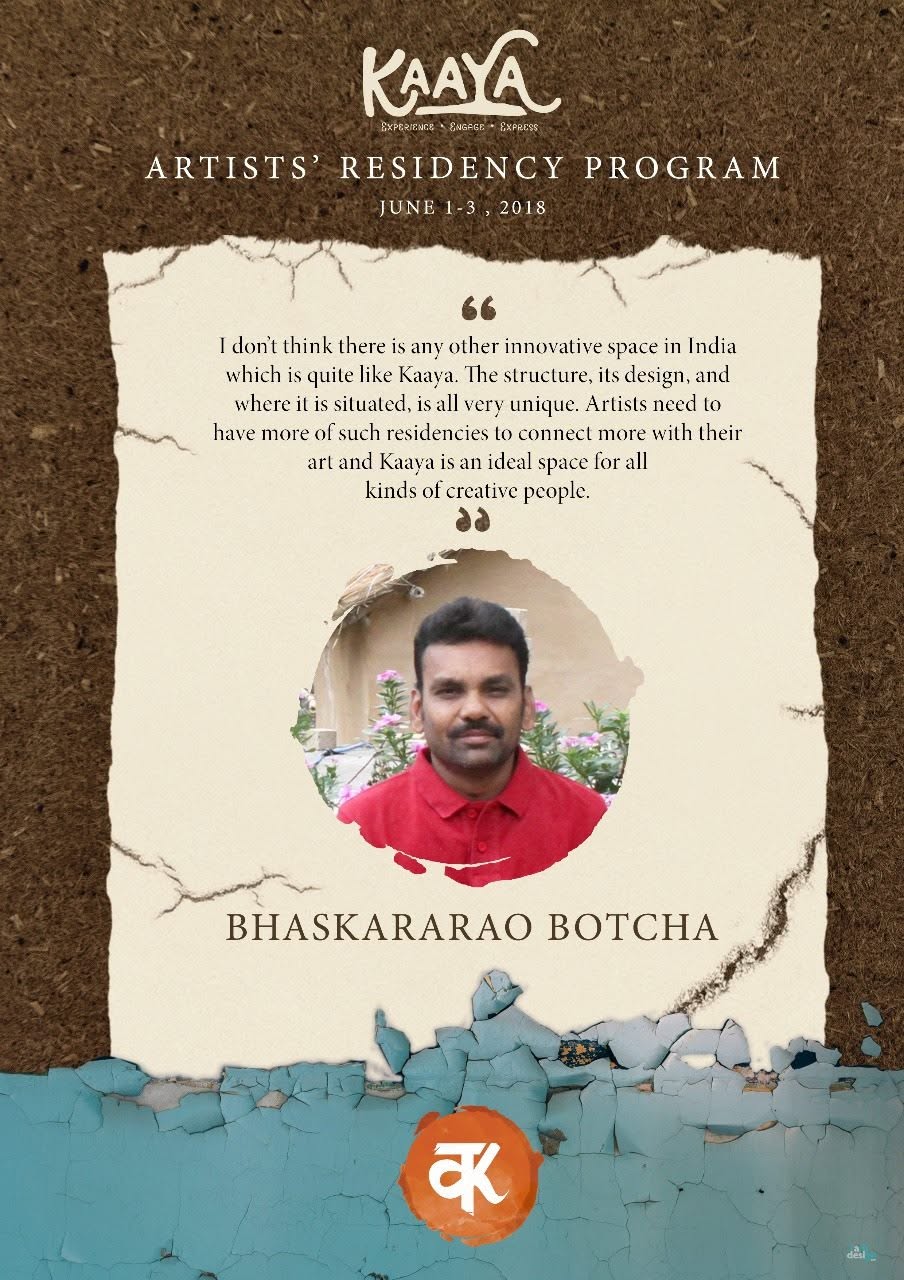
Hyderabad-based artist Bhaskar Rao, whose work has reached international recognition including selection into the Art Revolution Taipei salon, fused his love of trees and landscape with the quiet beauty of Tilwari village.

Delhi-based sculptor Amit Singh, shaped by an MFA from Lucknow and a six-month residency in the Netherlands, worked with clay, glass, metal, and Plaster of Paris during his three days with us — a glimpse of a much wider practice.

Eight artists, eight very different practices, one residency that asked nothing of them except to make, share, and be present.