Holding Space for Stillness and Spark

“In the silence of the hills, we often hear what the noise of the world drowns out — our truest selves.”

This past week at Kaaya, I witnessed that truth again and again.

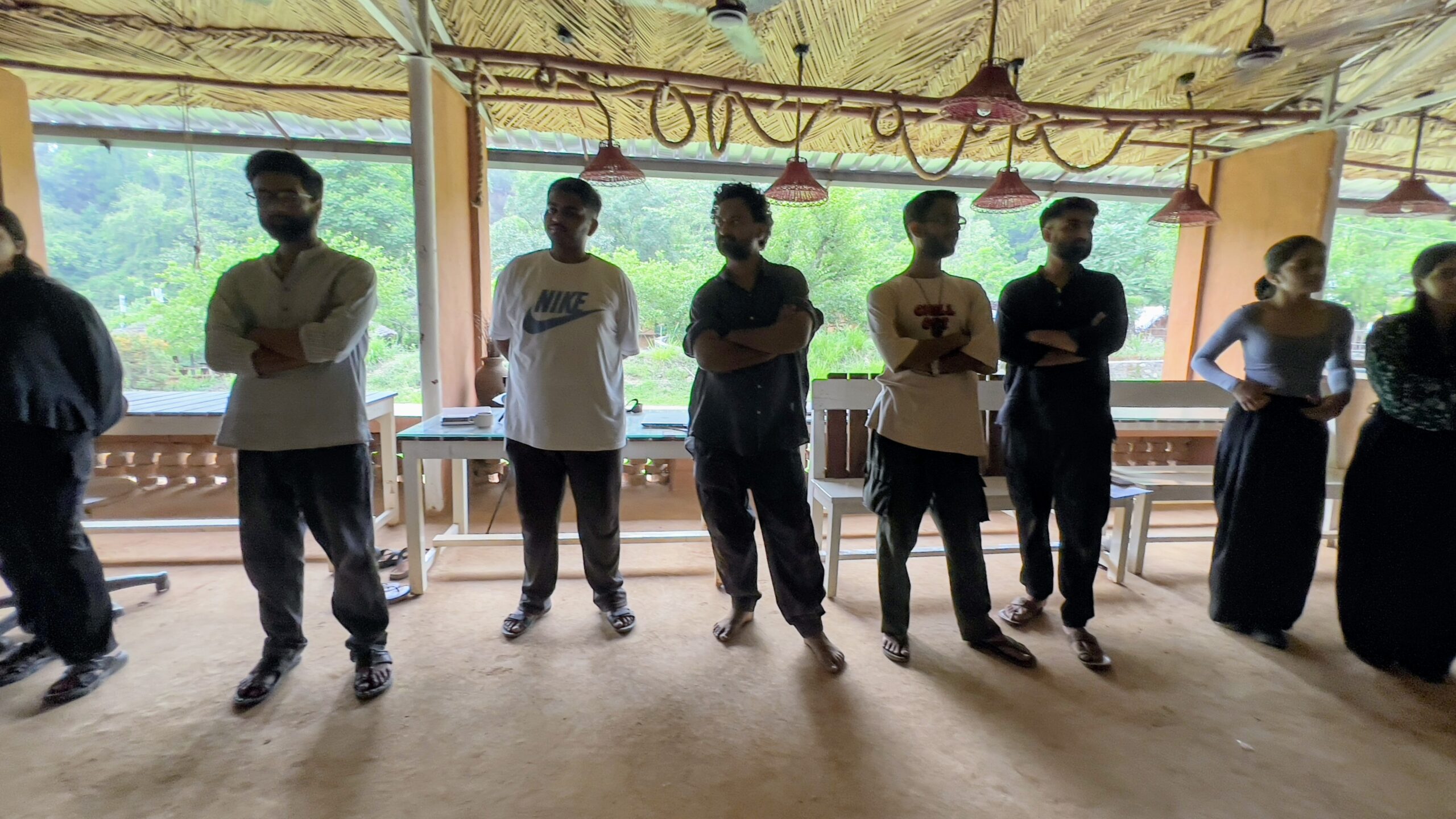
From June 17 to 22, our small world here in Tilwari was gently stirred by the presence of 24 emerging artists — participants of the Padav Art Mentoring Program 2025, a collaboration between Kaaya and the Bangani Art Foundation.

Our land has hosted many gatherings over the years, but this one felt different. Deeper. More aligned. More rooted.

What Padav brought into our space

Padav, at its core, is not just a mentoring programme — it’s a pause with purpose. A space to catch one’s breath on the steep climb of becoming. For a full week, our studios, trees, and trails held the quiet intensity of brushes in motion, of self-doubt unravelling, of questions being born, of stories being re-stitched into canvases.

Everywhere I turned, something quietly beautiful was happening — an artist alone on the stone ledge, sketchbook on lap, eyes scanning the forest canopy; a group huddled under the mango tree in post-session reflection; the clink of tea glasses, the hum of late-night conversation, the comforting rhythm of artists stretching their own canvases, some for the very first time.

Mentors who taught by being

Padav would not be what it is without the wisdom and generosity of Jagmohan Bangani and Poonam Sharma. Watching them guide, question, nudge, and simply listen was an education in itself. This year, we also had Himanshu Trivedi with us — his eye behind a camera lens, his heart fully with the fellow artists.

They brought more than knowledge. They brought their own journeys, their insights, their vulnerabilities, and a refusal to offer ready-made formulas — choosing instead to trust each fellow’s own evolving path. As a host, it was humbling to watch how Kaaya’s earthy, slow, raw energy responded to their grounded presence.

For the artists who came with open hearts

To the twenty new fellows and four core artists — thank you for choosing to arrive, not just physically but emotionally. You trusted a space you’d never seen, people you hadn’t met, and a process you couldn’t predict. You shared laughter, tears, unresolved questions, and bold beginnings. You brought colour into our walls, and left something behind in return.

I hope you carry Kaaya with you in small ways — in your next painting, your next pause, your next doubt.

Why Kaaya exists

When I left a career in development consulting and founded Kaaya in 2011, it was around one quiet question: can we create a place where people reconnect — with nature, with each other, and with themselves?

Programmes like Padav keep affirming the answer.

Kaaya isn’t a venue. It’s a living ecosystem — a slow space in a fast world, where time doesn’t rush, ideas don’t compete, and art isn’t packaged but allowed to emerge.

Until the next Padav

As the exhibition closed on Sunday evening, and we watched visitors take in the fellows’ work — some proud, some still unsure — I felt a deep gratitude. Not for a job well done, but for a space well held.

Padav will return. And whenever it does, Kaaya will be waiting — with open skies, open courtyards, and open arms.

— Santosh, 22 June 2025
Padav Fellowships

“Padav (a camp) is a stopover in one’s journey. It is usually a natural place to rest, with water, food, and shade, with people around. It is the space where there are relaxed conversations without prejudice or expectation — co-travellers sharing insights, exchanging tips, and sometimes being guided forward by someone who has walked the same path before.”

The Padav programme is an opportunity for mentors and mentees to connect — living as residents at Kaaya for a short period. It is a departure from conventional mentor-mentee relationships, built around the idea that the right physical space can do as much work as any formal curriculum. Kaaya itself is designed to foster real, experience-based connection in a natural environment, and Padav asks what becomes possible when mentorship happens inside that kind of setting rather than a classroom or office.

Under the programme, a working relationship is established between mentor and mentees that continues beyond the residency itself — sustained afterward through both offline and online contact.

Programme scope

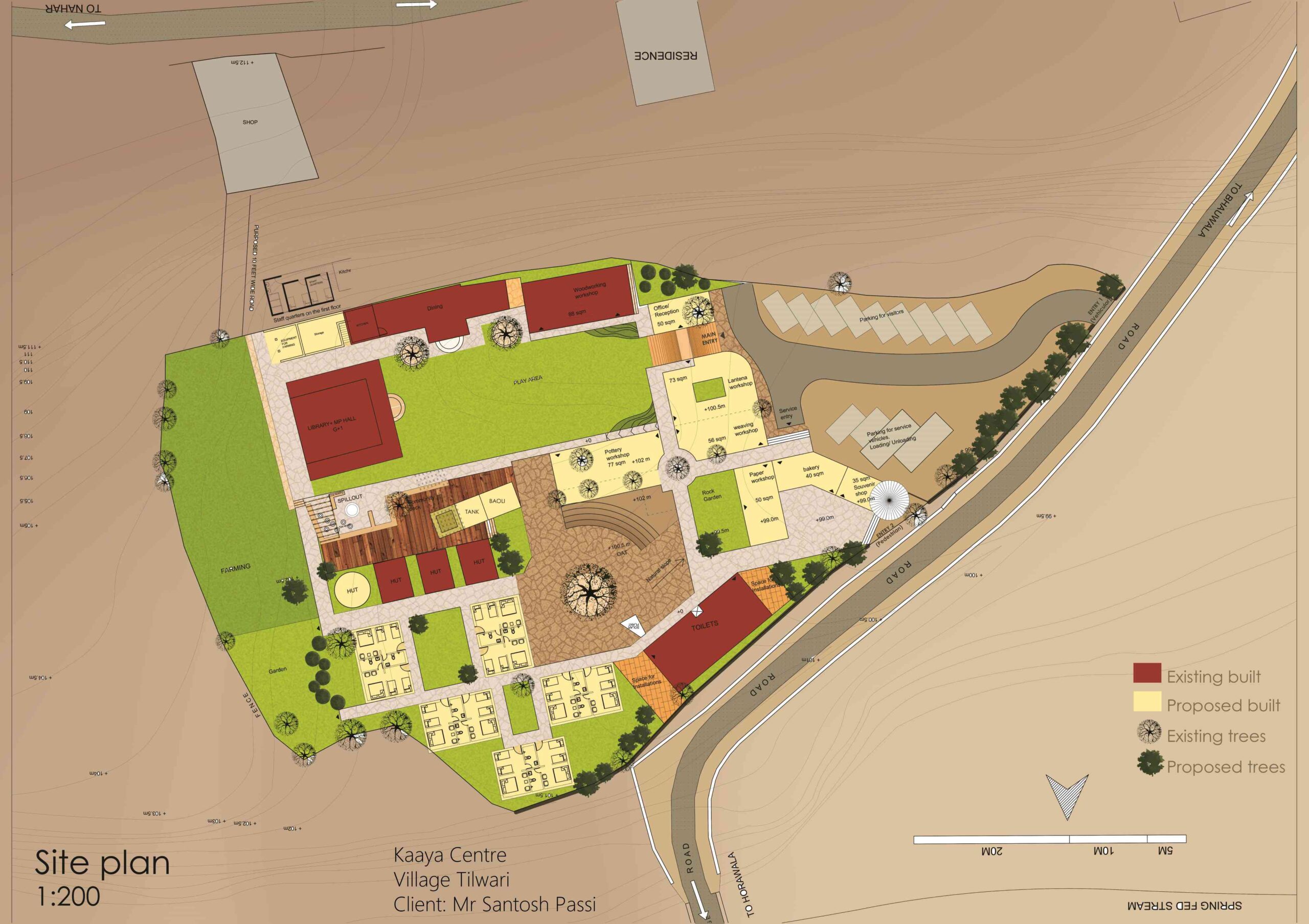
The aim is to offer fellowships to 100 new fellows each year, divided into five cohorts of twelve to twenty. Each year, Kaaya works with five mentors, representing different theme areas — currently arts and performing arts, and handicrafts and artisanal work, since these are the areas where Kaaya can presently offer the most relevant setting and support: a small art and pottery studio, a wood workshop, an amphitheatre, and a small nursery.

The mentor

Someone who has made a notable journey and arrived at a point from which they can look back — and in looking back, recognise others who have only just begun. By stopping, meeting, and sharing something of their own path, the hope is that at least some younger people will be encouraged to keep going.

The mentees (the fellows)

Typically individuals who have already shown some early commitment to a path of their own. Mentors generally define the eligibility for their cohort; there is an open call, and the first shortlist of twelve to twenty fellows is made jointly between the mentor and Kaaya.

The physical space — Padav I

The first residency, where mentor and mentees live together for a week, takes place at Kaaya in Dehradun. The space provides both logistics and a framework within which the mentor-mentee relationship can develop — built into the daily routine, the shared activities, the food, and the living context itself.

The mentor’s space — Padav II

A second residency, roughly a month later, in the mentor’s own studio, home, workshop, or a rented space nearby. A smaller group from each cohort is selected by the mentor and Kaaya for this more intensive exposure, gaining access not just to the mentor’s guidance but to their wider network and opportunities to share independent work.

A note to those who want to support this

If this work resonates and you’d like to help — you can support us in reaching potential mentors and candidates, fund the programme broadly or a specific mentor or cohort, or simply advise us on how to extend its reach. Reach out at jbangani@kaaya.org or santosh@kaaya.org.

About the founding members of the Padav programme

Jagmohan Bangani is a full-time visual artist from Uttarakhand. Raised in the remote Bangaan region, he has travelled widely and now lives and works in Delhi, holding a Master’s in Painting from Winchester School of Art, UK. He is a recipient of the Ford Foundation Fellowship (New York), a Junior Fellowship from the Ministry of Culture, Government of India, and a Research Scholarship from Lalit Kala Akademi, New Delhi. His work has been shown in six solo exhibitions and held in collections including the Secretariat of Uttarakhand State, Lalit Kala Akademi, and the Ford Foundation.

Santosh Passi is a development practitioner. Sensing the need for a genuine urban-rural connect programme, he conceptualised Kaaya in 2011. He is an alumnus of the Indian Institute of Forest Management and a Fellow in International Development Policy from Duke University, and a recipient of the Ford Foundation International Fellowship. After years working as a programme and policy evaluation consultant in community development, he chose in 2011 to make Kaaya his full-time work — building it as a social enterprise around which programmes like Padav could take shape.

Intern Speaks

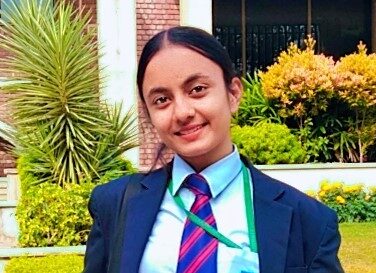
By Shagun Manwal, BSc Life Sciences, 2nd Year, Uttaranchal University, Dehradun

My fine-tuned internship experience at Kaaya Learning Centre

It’s been almost two weeks away from home since I started my internship at Kaaya, and I never thought I’d learn this much in such a short time. In these two weeks I completed three tasks assigned to me on the very first day — plant identification and labelling, vermicomposting, and apiculture, along with soil testing.

Of these, my real interest was in vermicomposting and apiculture.

Why I chose these

Toward the end of last year, I started thinking about doing an internship during my winter break, somewhere connected to my field. As a life sciences student, vermicomposting and apiculture felt like the natural choice. I’ve had a fear of creeping, crawling things since childhood — but I decided to go with these two anyway, partly to learn something new and partly to face that fear directly.

How I landed here

I remembered visiting Kaaya once as a child, and recalled there being bee boxes around the property even then. I asked my aunt, who lives nearby, whether the place still took student interns — and it did. I got their contact details, reached out, and was asked to visit first for a briefing. As soon as exams ended, my friends and I made the trip. The environment struck us immediately — calm, and genuinely beautiful.

A nature- and animal-friendly place

Kaaya offers a quiet, peaceful, nature-friendly environment to be around living creatures. The variety of trees here is home to birds and insects of all kinds — honeybees moving freely, birds building nests without disturbance. Even small choices reflect this: no loud music that might disturb the animals, paper decorations instead of rubber balloons, lighting kept low enough at night not to interrupt the sleep of birds and animals. Trees are planted according to the shade or sunlight a particular direction needs, including a range of spices, medicinal plants, and other species. It’s a place suited to anyone who genuinely loves this kind of environment.

My vermicomposting experience

Vermicomposting was entirely new to me — I’d only read about it in textbooks before, and experiencing it firsthand was far more exciting than I expected.

After some initial research, we set up a small plastic compost pit in the greenhouse area at the back. The hardest part was gathering raw material: I needed 30 kilograms of fresh cow dung. Finding that much wasn’t difficult, since we were in a village and my relatives keep cows — but carrying it was another matter entirely. The Kaaya team was a huge help, eventually getting all 30 kilograms over in a plastic sack.

That same day, we filtered the soil and laid the bottom layer — about two to three inches — into the compost pit, which did some damage to my clothes. Then came the cow dung layer, spread by hand to form the vermibed, moistening and levelling it with bare hands while simultaneously trying to document the process with the same dirty hands. An unusual feeling, but manageable.

The next challenge was finding the right worms — specifically red worms (Lumbricus rubellus), not easy to source locally. We visited an agricultural organisation the following day, where I was asked to pick the worms up with bare hands. My mentor wanted a photo of the moment, but I hadn’t imagined doing it without gloves — it was, honestly, an unpleasant experience. Once we got the worms back to Kaaya, I put gloves on this time, dug small holes into the vermibed, and placed them in. That was the hardest part of the process behind me.

After levelling another layer of cow dung over it, the final step was spreading biodegradable kitchen waste across the top — and then waiting roughly three months for the compost to be ready.

Volunteering and Internships at Kaaya

One of the aims of Kaaya’s intern and volunteer programme is to offer a genuine practice ground for sustainability — a space where individuals can move from learning about these ideas to actually living them, even briefly.

Interns and volunteers work alongside the Kaaya team and the local community on whatever is live at the time: farming, construction, programme support, documentation, or fieldwork tied to one of Kaaya’s ongoing initiatives. The work is real, not simulated — which means the learning tends to be uneven, occasionally frustrating, and usually more useful than a structured curriculum could offer.

If you’re looking to spend meaningful time at Kaaya — weeks rather than days — this is generally where that conversation starts.

Forest Fire — An Intern’s Experience

It was eleven in the morning when we heard someone shout in the distance: “Aag lagi!” A forest fire — the kind we had never seen before, let alone fought. What seemed like a routine incident to those who live here was completely foreign to us.

Within minutes, the entire camp mobilised. People united regardless of age or gender, forming a chain to pass buckets of water. Forest rangers responded soon after, working alongside residents and interns to contain what could have spread much further.

It wasn’t part of any programme curriculum. It was simply what happened, and what was required of everyone present. For the interns who were there, it became one of the most direct lessons in what it actually means to live within — and be responsible for — a fragile landscape. Not an abstraction about climate risk, but a fire, a bucket chain, and neighbours who knew exactly what to do.

Architecture Student Study Tour

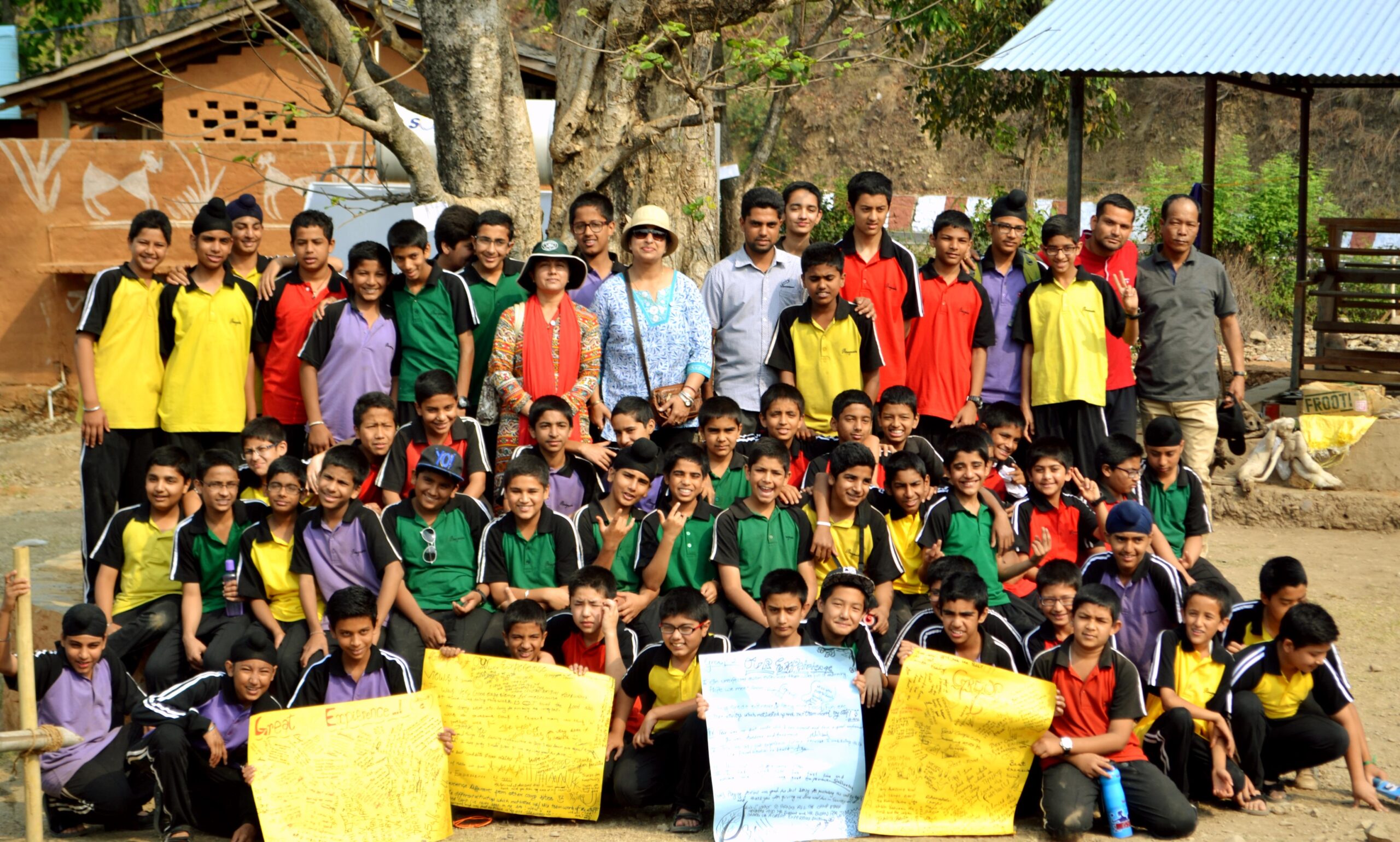
A group of 35 students, along with their faculty from Bharti Vidyapeeth College of Architecture, Navi Mumbai, visited Kaaya as part of their summer workshop programme to study sustainable, vernacular construction.

Kaaya’s buildings — built without a blueprint, from local soil and local skill — offered the students a working example of architecture that responds to its environment rather than imposing on it. Sessions covered mud construction techniques, material sourcing, and the practical trade-offs of building this way: what it costs, what it takes, and what it gives back in return.

For architecture students used to studying sustainable design in theory, a few days of actually mixing mud and watching walls go up tends to change the conversation considerably.

A Class Tour on Climate

For young climate enthusiasts

It started as a request for a one-day programme — something meaningful for a group of students, at a time when children have begun asking harder questions about the world they’re inheriting.

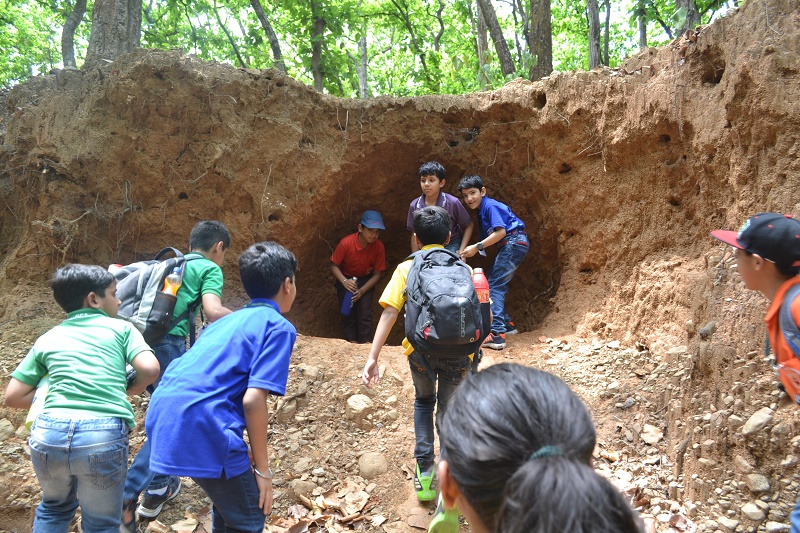
We built a day around climate change specifically: not as a lecture, but as something to encounter directly in the landscape around Kaaya — changing weather patterns affecting local farming, water scarcity in the hills, the small, visible signs of a shifting climate that a city classroom rarely makes tangible.

It’s one example of how a single-day programme can be shaped entirely around what a particular group of students is curious about, rather than a fixed itinerary.

Educational Tour

Plan a field trip for students

In classrooms, students engage with pressing global issues — environment, climate change, sustainability — largely through their syllabus. An educational tour at Kaaya is designed to give that learning a place to land.

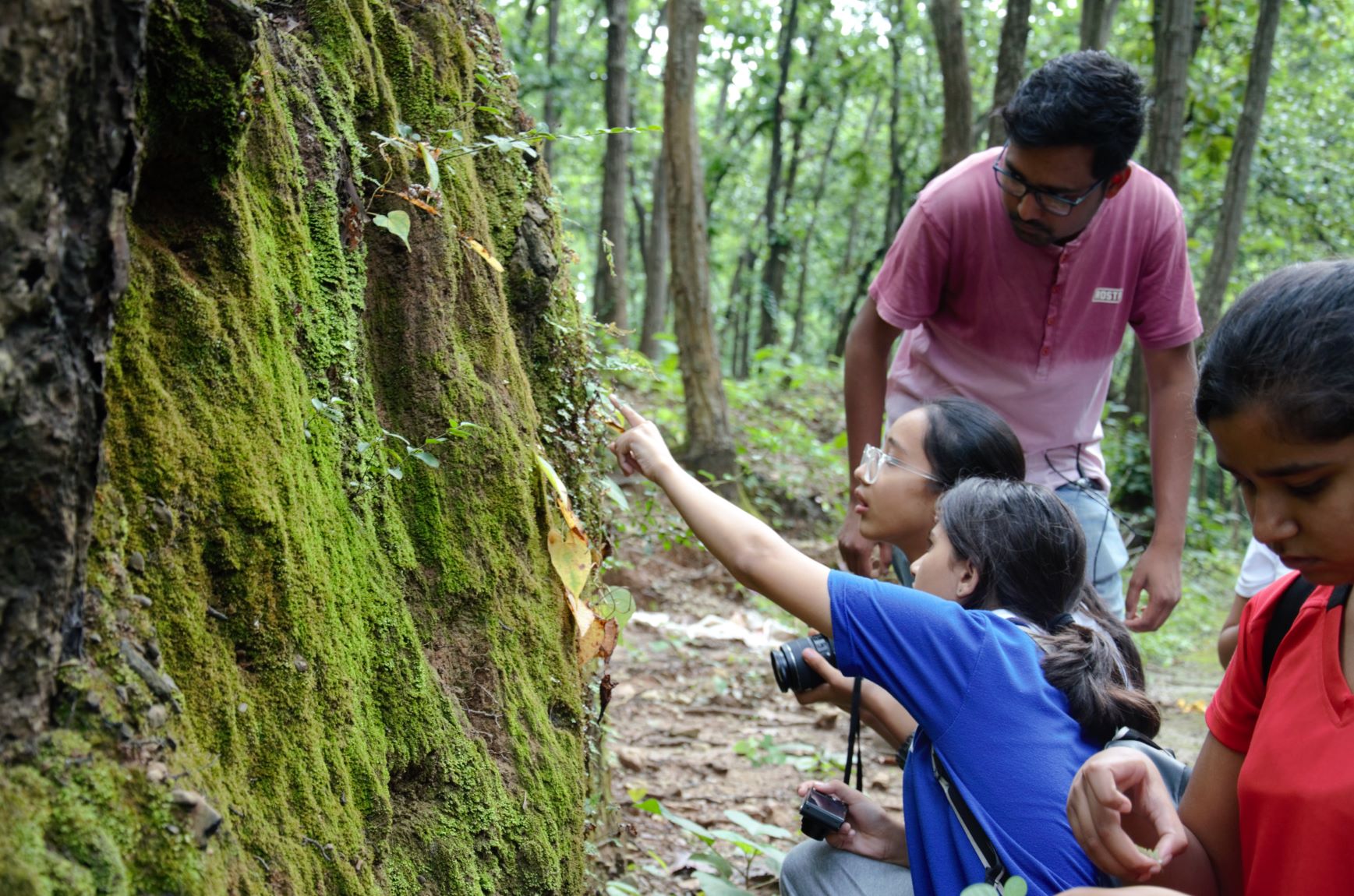
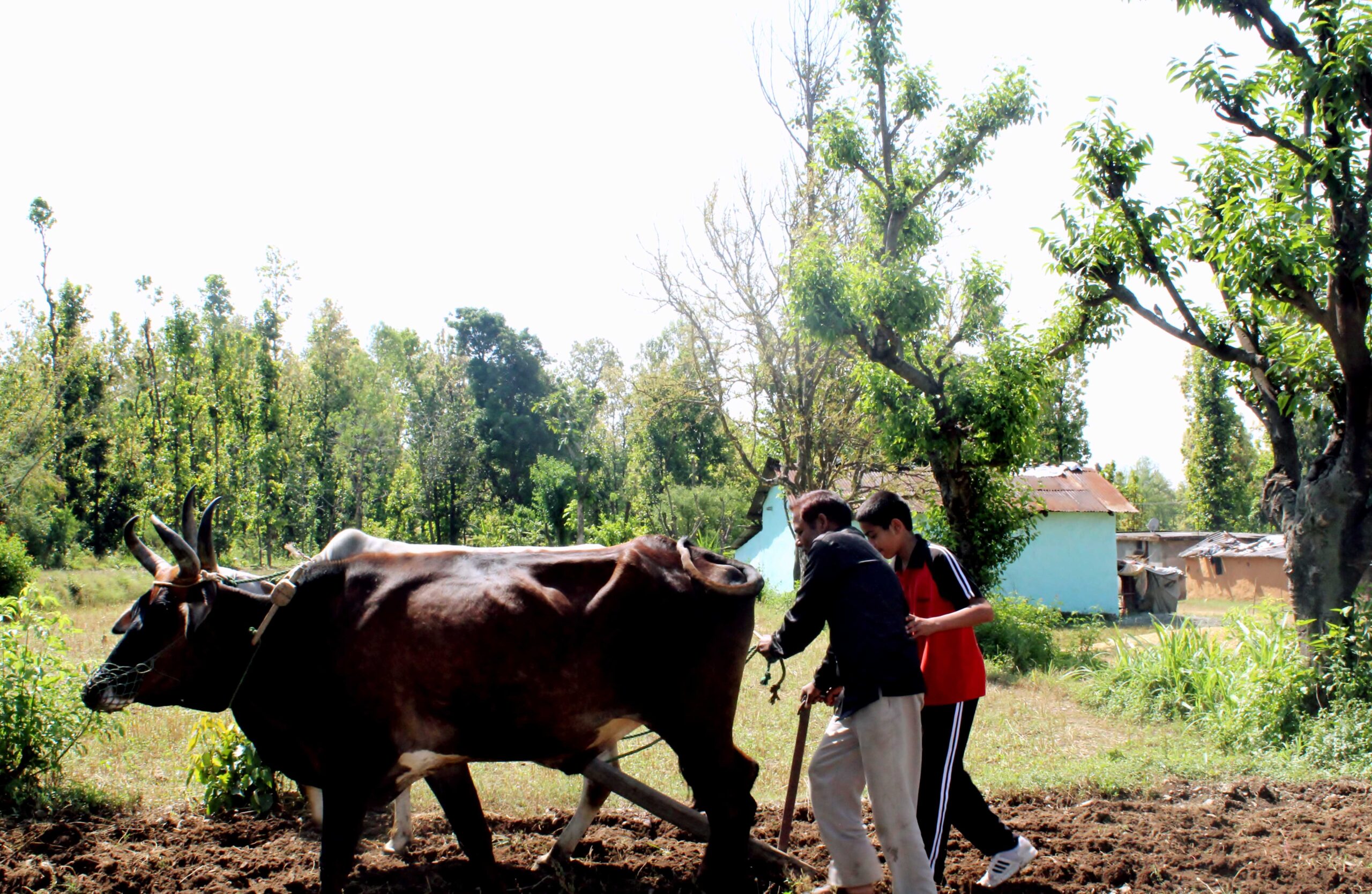
Rather than a generic excursion, the tour is built around the specific concerns a school or teacher brings to us: water, soil, local livelihoods, biodiversity. Students spend time with the people and systems that make up Kaaya’s neighbourhood — not as observers on a bus tour, but as participants for a day or two, asking questions of farmers, resource persons, and the land itself.

Nature Camps

Participate in a Nature Camp

Our semi-structured ‘Journeys’ connect students to ideas ranging from ecology to sustainability — not as abstractions, but through direct, hands-on engagement with the land Kaaya sits on.

Each Journey gives a student the opportunity to connect what they’ve learned in the classroom to something they can touch, follow, or take part in. Whether it’s the seed journey, the milk journey, or the soil journey, the aim is the same: to let the land do some of the teaching that a classroom can’t.

These short immersions — typically a few days — are built for school groups looking for something more substantial than a field trip, and lighter than a full residency.

Why Send Your Kids to Kaaya?

Letting nature be the teacher

The natural setting of a village provides an ideal ground for fun, learning, and exploration. Surrounded by forests, hills, water bodies, and rural life, time spent at Kaaya means adventure, physical challenge, new smells and tastes, sounds that fill the mind with wonder — sometimes excitement, sometimes a little fear, often simple delight.

We value unstructured time. We often let children feel bored, because we believe boredom holds something useful — it’s where imagination tends to begin, once a child stops waiting to be entertained and starts looking around instead.

Children who come to Kaaya usually carry some classroom knowledge of the topics we work with: ecology, food systems, sustainability. What they’re missing is field context — the experience of holding soil that’s alive, of meeting the people whose lives depend on the land, of discovering that the things they’ve read about are actually happening, right here, in ways a textbook can’t quite capture.

That’s the offer. Not a curriculum delivered better, but a different relationship with the same questions.